


"some wonderful naturalistic and believable performances from an excellent cast, coupled with a suitably gritty visual style that only adds to the realistic atmosphere"
Ken Loach has been one of Britain’s most acclaimed and respected directors for over 50 years. His films often deal in the gritty realities and hardships that the working class of Britain, face on a regular basis, often tackling controversial topics and increasing the level of public discussion and awareness of such taboo topics.2016 sees the re-release of Poor Cow his 1967 feature film debut following on from his highly successful tenure as a director of television drama.
The film follows Joy, a young woman who has just run away from home following the birth of her son and moved in with her husband, an abusive thief by the name of Tom, who shortly after the film begins finds himself sent to prison for robbery. Joy soon finds comfort with an associate of her husband by the name of Dave, a kind hearted man who provides much needed stability and love for Joy and her son. However Joy’s stability proves to be short-lived as she continually comes up against many struggles with money, men and her own attempts to have a happy live.
The acting from the cast is stellar often relying heavily on improvisation which adds an air of authenticity to the characters and their struggles. The late Carol White is wonderful in the leading role of Joy; a likeable woman whose main aim in life is simply to be happy yet, through various circumstances, continuously struggles to achieve this aim.
White makes the character relatable and likeable, we can sympathise with her aims it pains us to see her struggle. A particular powerful scene is her running around a partially demolished housing block looking franticly for her young son who has wondered off, the tears and pained expression on her face feeling much more genuine rather than simple acting.
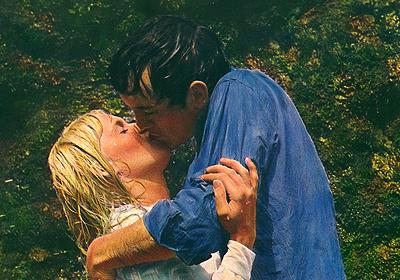
Also excellent is Terence Stamp in an early film role as Dave, Joy’s main love interest following the imprisonment of her husband. Dave is a crafty and mischievous type who is often stealing flowers from the back of cars and robbing old ladies of their jewellery.
But beneath his criminal exterior we see the gentle loving man beneath, acting as a source of stability for Joy and being a doting adoptive father for her son. It makes his eventual downfall all the more tragic as he finds himself in trouble with the law due to his criminal lifestyle.
The film has a gritty naturalistic, often documentary like visual style. With the primary settings of the film being grimy tenement buildings, smoke filled pubs and the rain soaked alleys of London in which the local children play. The film acts as a kind of window onto the sort of gritty reality that 1960s London actually was, albeit one that was often hidden away and ignored beneath the glitz and glamour of the Swinging Sixties that is often portrayed in films of the period.
I’m slightly torn on this film if I’m honest. On one hand it is a very well acted and realistic drama about the plight of a young working class woman attempting to navigate life’s trials and tribulations. However I did struggle watching it to give it my full attention perhaps due to its somewhat jumbled up format, with the story playing out over a series of vignettes prefaced with text describing the characters’ state of mind at the time.
However my mixed feelings could be influenced by this being my first time watching a piece of Loaches’ work, his first theatrical effort no less. Thus perhaps my enjoyment was tempered by my lack of previous experience with his very particular style of making films.
If you are a fan of Ken Loaches’ work you would probably enjoy Poor Cow, those unfamiliar with Loach may struggle, like I did, with its stripped back style of presentation. However this should not be a warning away from the film, far from it as I feel that it is a good film at heart.
With some wonderful naturalistic and believable performances from an excellent cast, coupled with a suitably gritty visual style that only adds to the realistic atmosphere, Poor Cow is a fine cinematic debut from the man considered to be one of Britain’s greatest filmmakers.