


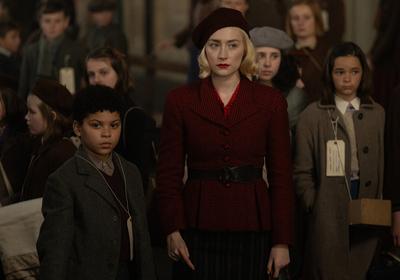
"McQueen captures a complex and often painful chapter of history, urging viewers to confront the less glamorous realities of survival amid chaos"
Presented as the Opening Gala of this year’s London Film Festival, Blitz is Steve McQueen’s fragmented portrayal of a war-torn London during the infamous WWII bombings perpetrated by Nazi Germany.
Set in 1941, London is under siege from relentless aerial attacks, leaving the city in ruins every night. In a desperate attempt to protect the younger generation, parents send their children to the countryside.
Among them is Rita, a single working-class mother who reluctantly decides to send her son, George, away for his safety. However, George is determined to stay with his family and, in a moment of desperation, he jumps from the moving train to return to London. His journey home leads him through various challenges and encounters with individuals profoundly shaped by the horrors of war.
Meanwhile, Rita grapples with the guilt of having sent her son away, unaware that he never made it to the countryside. She faces her own struggles as a working-class woman, fighting for shelter and the right to use underground stations for protection amid the chaos.
Steve McQueen chose to premiere Blitz in London as a tribute to the city that serves as the backdrop for this poignant narrative. While the story has the potential for an emotional journey, the film sometimes feels a bit clinical in its execution, with the camera following the action in a detached manner.
McQueen explores a multitude of themes, offering a different perspective on the Blitz—a time often remembered for its resilience and the famous “Keep Calm and Carry On” motto. Instead, he reveals a harsher reality: working-class individuals left to fend for themselves, women working in munitions factories while the men are off fighting, and overcrowded shelters struggling for support. The city is filled with protests demanding that tube stations remain open for protection during the bombings, and amidst this turmoil, racism and segregation flourish as survival instincts clash in a melting pot society created by Imperialism.
While the scope of the project may feel ambitious for any other director, McQueen successfully divides the narrative into two separate perspectives by following Rita and George through their parallel journeys. However, the film sometimes leaves the audience emotionally distant from the story.
The cast works seamlessly together, delivering realistic and heartfelt performances. Saoirse Ronan shines as Rita, capturing her character’s internal struggle between protecting her child, seeking her own safety, and supporting a community that views her as damaged for her relationship with a black man, who was unlawfully deported after defending himself from harassment. Yet, her performance feels more subdued than emotionally resonant. Elliot Heffernan, however, stands out among the seasoned cast, delivering a genuine and moving portrayal of George.
The film’s cinematography and editing play a crucial role in revealing the darker aspects of war. Themes of looting, racial abuse, and the stark contrast between the government’s exploitation of the Commonwealth ideal and the reality of racial integration in London are powerfully conveyed through masterful camera work and scenography.
A particularly striking ballroom scene illustrates how swiftly war can shatter lives, leaving everything in disarray. This scene also serves as a powerful backdrop, highlighting the worst of human nature by exaggerating the actions of looters robbing the dead bodies of the wealthy who perished in the attack.
In Blitz, McQueen captures a complex and often painful chapter of history, urging viewers to confront the less glamorous realities of survival amid chaos. Yet, the film also celebrates resilience and shines a light on the injustices of racism and war in a time when violence, war and racial crimes are still fully present in our modern society.
No Comment