


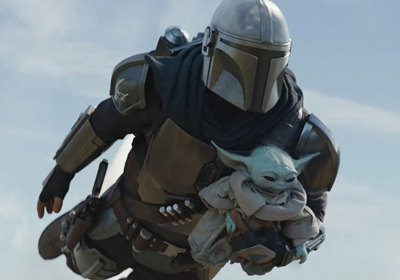
"The Mandalorian and Grogu didn’t need to save Star Wars at the cinema. They just needed to be Mando and Grogu"
I have to admit, my expectations for Star Wars: The Mandalorian and Grogu were relatively low.
The film didn’t exactly set the box office alight when it arrived in cinemas back in May, and despite being the first Star Wars movie on the big screen in years, it somehow never felt like the enormous cinematic event you would expect from a galaxy far, far away.
Then I discovered, almost by accident, that The Mandalorian and Grogu had quietly arrived on Disney+ on September 2.
Seriously, Disney. This is Star Wars.
So, a few days late to the streaming party, I finally sat down to watch it, and here’s the slightly frustrating thing:
It’s good.
It’s not great. It isn’t among the best Star Wars stories ever told and there is very little here that convinced me this adventure ever needed a cinema screen. But as a feature-length continuation of The Mandalorian?
It’s fun.
And sometimes fun is exactly what Star Wars needs to be.
For three seasons, audiences fell in love with Din Djarin and Grogu on Disney+. Their relationship was built there. Their adventures were watched there. The Mandalorian was one of the shows that helped define Disney+ in its earliest years, demonstrating that television set within the Star Wars universe could look and feel every bit as spectacular as its cinematic counterpart.
So I’ve never really understood the decision to take what was essentially the next chapter of that story — something that began life as plans for a fourth season — and decide that it suddenly needed to become Star Wars’ grand return to cinemas.
Having now watched the finished film, I understand it even less.
That’s not because The Mandalorian and Grogu is bad.
It’s because it feels completely at home at home.
The production values are superb, the action is entertaining and the film looks suitably expensive. The score is particularly excellent, providing the adventure with that unmistakable musical scale that Star Wars demands.
Then there’s Zeb.
Garazeb Orrelios making the transition from Star Wars Rebels into live action could very easily have gone horribly wrong. Zeb’s exaggerated animated appearance isn’t necessarily something you’d expect to translate naturally into a photorealistic character, yet he looks incredible here.
More importantly, Steve Blum makes him Zeb.
You could render the character beautifully, but without Blum’s voice, personality and delivery, you’d simply have an impressive-looking Lasat. The moment he speaks, however, the illusion is complete. This is the character we knew in Rebels, somehow standing convincingly alongside the live-action inhabitants of the Star Wars universe.
Sigourney Weaver, on the other hand, feels largely wasted.
It’s Sigourney Weaver in Star Wars. That sentence alone should carry enormous weight, and while she’s predictably good with what she’s given, I kept waiting for the film to properly utilise someone of her considerable ability. It never really does.
At the centre, though, are the two characters whose names are on the poster.
Din and Grogu remain enormously likeable company. Their relationship is still the heart of this corner of the franchise and, crucially, spending another couple of hours with them remains enjoyable.
Which brings me back to the film’s biggest problem — and it isn’t really the film’s problem at all.
Disney misunderstood the product it had.
Cinema is expensive.
Going to see a movie isn’t an insignificant purchase for a lot of people anymore, particularly when travel, food and everything else surrounding that cinema ticket is taken into consideration. Audiences increasingly need a reason to make that investment.
Asking viewers to pay theatrically for what had effectively been positioned as the continuation of a story they’d already spent years watching as part of their Disney+ subscription was always going to be a strange proposition.
Had The Mandalorian and Grogu simply arrived on Disney+ in May as a feature-length Mandalorian event, I would have watched it then.
And I suspect the conversation surrounding it would have been considerably different.
Instead of box-office numbers becoming a referendum on whether audiences still want Star Wars, the conversation could simply have been about whether Disney had delivered another entertaining Mando adventure.
On that basis?
They did.
There is still an audience for Star Wars. There is still enormous affection for these characters. Not every project, however, has to serve the same commercial purpose.
Disney has Star Wars: Starfighter to make the case for a new generation of cinematic Star Wars. Let that film be designed, marketed and presented as an experience audiences need to see on the big screen.
Mando and Grogu never needed that responsibility placed upon their shoulders.
They began life on streaming. We fell in love with them on streaming. And, having finally watched their movie on streaming, that’s exactly where this adventure feels like it always belonged.
The Mandalorian and Grogu isn’t a spectacular return of Star Wars to cinema.
It doesn’t need to be.
It’s a good-looking, great-sounding, perfectly serviceable Star Wars streaming movie featuring characters I still enjoy spending time with.
And had Disney trusted the product enough to recognise that in the first place, I suspect we’d have spent a lot more time talking about how much fun it is and considerably less time talking about how much money it didn’t make.
Sometimes understanding your audience means understanding where they want to watch you.
The Mandalorian and Grogu found their audience on Disney+. It’s where their movie should have found them too.
No Comment