


"The Art of Healing: How ‘Sentimental Value’ Redefines Cinema’s Emotional Reach "
There’s something unique and magical about being in the Grand Lumière Theatre. You enter that vast, reverent space without knowing exactly what you’re about to witness, only that everyone around you shares the same love for cinema and the same hunger for something transcendent. A hush of anticipation fills the air as the cast and crew arrive, and a wave of applause ripples through the room, recognising not just their presence, but also the vulnerability they’re about to share. Then, the curtain rises.
Applause fades. The room holds its breath. Light spills onto the screen, and we vanish into the film.
And then, it ends, yet no one leaves. The lights return, and something extraordinary occurs. The audience rises, erupting into applause that doesn’t cease. It builds and builds until it becomes something more than mere praise. It’s gratitude, awe, communion. What unfolded that night earned its place in the history of the festival: a 19-minute standing ovation, the third longest in Cannes history. It wasn’t just deserved; it was inevitable. Because what Trier delivered wasn’t merely a film. It was an honest portrayal of a soul, a piece of art that left its mark on both the history of film and the emotions of all who watched, applauded, and wept. We weren’t just observing history at that point; we were becoming a part of it.
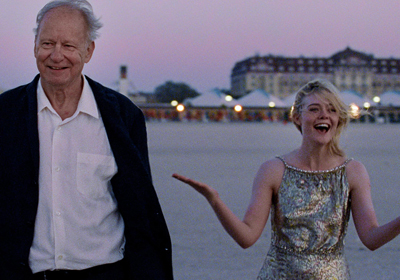
Joachim Trier makes a triumphant return to the Cannes Film Festival with ‘Sentimental Value’, a film that is both profoundly moving, quietly humorous, and heartbreakingly honest. This intimate family drama centres on a clan of artists struggling with grief and loss within the walls of their ancestral home, while yearning for a connection they feared was lost forever. Following up on his widely acclaimed ‘The Worst Person in the World’ (2022), Trier reunites with his muse Renate Reinsve, delivering another deeply personal and powerful exploration of family, forgiveness, and the agitated bonds between parents and children. In ‘Sentimental Value’, the story focuses on Gustav Borg (Stellan Skarsgård in arguably the finest performance of his career), a once-celebrated filmmaker and emotionally absent father who struggles to bridge the gap with his two daughters after the death of his ex-wife.
Gustav’s attempt at reconciliation comes through an unusual way: a new film project. Instead of directly confronting his eldest daughter Nora’s simmering resentment, he casts her as the lead in his autobiographical script, hoping that art can become their language of healing. Nora, played with fierce intensity by Reinsve, is a successful stage actress wrestling not only with the shadows of her past but also the complex feelings stirred by her father’s sudden return to her life. The dynamic between Skarsgård and Reinsve is electric. Skarsgård embodies Gustav with raw vulnerability, a man clinging to his artistic identity to mend broken family ties, while Reinsve delivers what may be the greatest performance of her career, portraying Nora’s conflicted emotions with breathtaking nuance.
‘Sentimental Value’ unfolds largely within the Borg family home, a place heavy with memories, unresolved tensions, any unspoken truths. Trier invites viewers to see this house not just as a backdrop, but as a silent witness to generations of human vulnerability and longing. Through Nora’s introspective narration, the film examines what it means to confront the past and the ways we try to make sense of the people we love and sometimes fail to understand. There’s a clear resonance in ‘Sentimental Value’ with the themes that have long concerned Joachim Trier: memory, regret, love, and the fragile bonds that connect us to one another. But here, Trier feels more inward-facing, stripping away the noise to focus on the quiet spaces where real emotional reckoning takes place. This is not a film driven by narrative twists or dramatic confrontations, but by the gentle accumulation of feeling, by pauses, glances, and words left unsaid. It’s a story about what lingers in the aftermath of life’s most defining moments: the weight of past choices, the complexity of unresolved relationships, and the ache for forgiveness that may never come. Rather than guiding the audience through clear arcs or cathartic resolutions, Trier allows ‘Sentimental Value’ to unfold like memory itself, fragmented and deeply human. His cinematic language has grown more refined, more trusting of silence and stillness. The result is a film that hums with emotional precision. Moments charged with subtext, silences that speak louder than words and characters drawn with such care they feel lived-in rather than written.
Trier’s direction is so assured that he resists the temptation to explain. He understands that the most profound emotions rarely announce themselves. They flicker beneath the surface, waiting to be felt rather than heard. And as ever in his work, humour emerges not as a distraction from sorrow but as a vital force of endurance. It’s how these characters manage to keep going, to relate, to resist the weight of what they carry. It’s how humour is used not to distract from pain, but to survive it. In this way, ‘Sentimental Value’ doesn’t just echo the spirit of ‘The Worst Person in the World’. It evolves it. Where that earlier film captured the anxiety and possibility of becoming, this one meditates on what comes after, the reckoning with who we’ve become, what we’ve broken, and whether it’s possible to find our way back to those we’ve lost or hurt.
At its core, ‘Sentimental Value’ is a meditation on the limits and possibilities of cinema itself. Trier shows that while film can be a bridge for empathy, expression, and even catharsis, it cannot replace the difficult work of human connection. Art can guide us to the doorstep, but it cannot walk us through. Real healing, true connection, demands presence, discomfort, and the willingness to be seen without the protection of performance. In this quietly devastating film, Trier once again proves why he is one of contemporary cinema’s most sensitive and intelligent storytellers. His ability to locate the emotional fault lines beneath ordinary lives, and to explore them with honesty, restraint, and grace, results in a film that lingers long after it ends: aching, human, and profoundly alive.
No Comment