
Helen Oakleigh On Queer Representation, Disclosure + Filmmakers Being Allowed To Learn
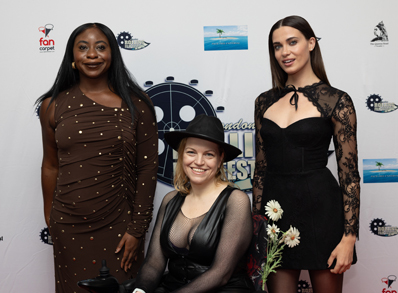
From growing up under Section 28 to examining more than a century of trans representation through the landmark documentary Disclosure, Helen Oakleigh used her London Rolling Film Festival 2026 session to explore why what audiences see on screen matters — particularly when the screen may be their first encounter with somebody different from themselves.
Representation doesn’t simply determine who gets to appear on screen.
It can help determine how audiences understand the people they encounter away from it.
During the closing industry programme of the London Rolling Film Festival 2026, Helen Oakleigh brought disability, class and queer representation together in a wide-ranging discussion about whose stories are told, who gets to tell them and what happens when decades of limited representation create assumptions about entire groups of people.
For the queer section of the session, Oakleigh highlighted films including Moonlight, Pride and Sweetheart — very different stories in which sexuality intersects with race, class, family, community and identity.
But she also looked backwards.
Because understanding why representation matters today requires remembering how recently some identities were deliberately excluded from everyday conversation.
GROWING UP UNDER SECTION 28
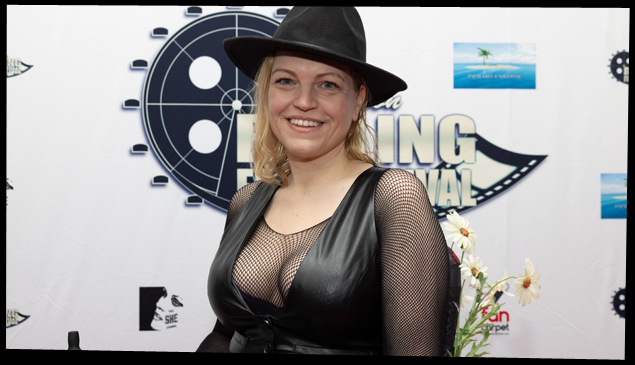
Oakleigh spoke about her own experience of growing up during the era of Section 28.
In a film shared during the session, she reflected on being born in the 1980s into an environment where queer identities could be absent from education and everyday discussion, and where homophobic language was commonplace.
The result could be profound.
If the people around you don’t openly identify as queer, schools aren’t discussing queer relationships and the representation you see elsewhere is limited or nonexistent, understanding your own identity becomes considerably more difficult.
Oakleigh described reaching adolescence without openly encountering people who said they were gay and recalled how queer identities could consequently feel almost abstract.
That history informed her answer to a familiar question:
Why is Pride still necessary?
Because the circumstances that made Pride necessary aren’t ancient history.
Many of the people who lived through them are still here.
REPRESENTATION ISN’T JUST ABOUT SEEING YOURSELF
There are two sides to representation.
Seeing somebody like yourself on screen can provide recognition.
But seeing somebody unlike yourself can provide understanding.
That distinction became central when Oakleigh introduced what she described as one of the most important documentaries ever made:
Disclosure: Trans Lives on Screen.
Directed by Sam Feder and executive produced by Laverne Cox, the 2020 documentary examines more than a century of trans representation across Hollywood.
Although specifically examining trans lives on screen, Oakleigh argued that its wider lessons can be applied to many demographics that have experienced discrimination.
The recurring pattern is what matters.
When audiences repeatedly encounter a group through a limited collection of stereotypes, those portrayals can begin to substitute for reality.
WHAT IF FILM AND TELEVISION ARE ALL SOMEBODY KNOWS?
During the presentation of the Disclosure case study, the session cited a figure suggesting 80% of Americans say they have never met a trans person.
Within the argument presented by the documentary, that gives film and television considerable influence over how trans people are understood.
Oakleigh explained:
“The examples of representation on screen [are] so nonsensical to the reality that people have a sense of otherness.”
If somebody knows trans people personally, an inaccurate film character exists alongside their real-world experience.
If they don’t, that character may become part of the limited information from which their understanding is built.
And historically, much of that information has been deeply problematic.
FROM MONSTERS TO PUNCHLINES
The session examined some of the recurring tropes explored by Disclosure.
Films including Psycho, Dressed to Kill and The Silence of the Lambs were discussed in relation to portrayals connecting gender nonconformity or trans-coded identities with deception, instability, violence and psychopathy.
Another recurring device turned trans identity into a punchline.
Examples discussed included Ace Ventura: Pet Detective and The Crying Game, where a revelation about a character’s identity is followed by an extreme reaction of disgust.
Seen individually, a film is a film.
Seen across decades, however, repeated patterns can create a cultural image.
Trans characters are deceptive.
Trans characters are dangerous.
Trans characters are something to laugh at.
Trans characters are something to be disgusted by.
That doesn’t mean every audience member who sees those films automatically adopts those beliefs.
Oakleigh’s wider point was that representation contributes to the cultural environment in which attitudes are formed — particularly when audiences have little other information available.
WHEN THE CONSEQUENCES AREN’T FICTIONAL
For Oakleigh, this wasn’t merely an academic discussion about cinema history.
The session also reflected on the violence experienced by trans people in the real world.
While discussing one of the works shown during the session, Oakleigh explained why it had been important to name trans people who had been murdered during the period in which it was filmed and to include their ages.
Many were extremely young.
That distinction matters.
A debate about representation can sound abstract when discussed purely through films, characters and scripts.
The people whose lives are being represented are not abstract.
Oakleigh connected dehumanising representation with a wider environment of prejudice, othering and violence.
“It needn’t be like that,” she said.
BUT PROBLEMATIC REPRESENTATION CAN STILL BE COMPLICATED
One of the things Oakleigh particularly valued about Disclosure was its refusal to flatten the conversation.
The documentary sharply critiques historical portrayals while also acknowledging that, for isolated trans viewers, even flawed representation could sometimes provide a rare opportunity to see somebody on screen who appeared to share something with them.
That doesn’t erase the problems.
It recognises that people’s relationships with culture are complicated.
Oakleigh described that approach as:
“Critiquing with love.”
You can recognise that something mattered to somebody while also examining what it got wrong.
You can love a film and still discuss its shortcomings.
And acknowledging problematic representation doesn’t require pretending that every person who created it deliberately intended harm.
“PEOPLE DON’T KNOW WHAT THEY DON’T KNOW”
That led to one of Oakleigh’s most important messages of the entire session.
“People don’t know what they don’t know, and everyone deserves a second chance.”
For filmmakers, fear can itself become a barrier.
If writers become convinced that portraying somebody from a different background means inevitably getting something wrong and being condemned for it, the safest response may appear to be avoiding those characters altogether.
That doesn’t improve representation.
Oakleigh argued instead for openness.
Listen.
Ask.
Research.
Speak to people whose experiences differ from yours.
And accept that learning sometimes involves discovering that something you previously believed was wrong.
“It’s okay to make mistakes. It’s okay to be learning. We are all learning.”
Nobody can know everything about everybody else.
What matters is being prepared to listen when somebody tells you something you didn’t know.
REPRESENTATION BEHIND THE CAMERA
Disclosure also provided Oakleigh with an example of inclusion extending beyond what audiences eventually see.
During production, a hiring framework was established under which non-trans department heads were required to train and mentor trans crew members.
That creates something more lasting than representation within one finished documentary.
It creates experience.
Credits.
Contacts.
Skills.
And potentially the people who will become the department heads on future productions.
The principle connects directly with Oakleigh’s discussion elsewhere in the session about working-class access to the industry and the importance of passing knowledge between generations.
Who appears in the film matters.
Who gets the opportunity to make it matters too.
AUTHENTICITY DOESN’T MEAN EVERYBODY HAS THE SAME EXPERIENCE
This also returns to the idea with which Oakleigh began the wider session:
Intersectionality.
There is no single queer experience.
There is no single trans experience.
Just as there is no single disabled experience or working-class experience.
Race, ethnicity, class, disability, sexuality, gender, age, education and countless other factors can intersect differently within every individual.
Authentic representation therefore doesn’t mean finding one supposedly “correct” way to portray a community.
It means creating enough space for people to be individuals.
PRIDE MUST BE ACCESSIBLE TOO
Oakleigh’s queer and disability discussions also collided in a particularly personal way.
She spoke about Pride as somewhere she had previously been able to participate — but said that since becoming a wheelchair user she had no longer been able to attend because of accessibility.
That exposes another side of inclusion.
A space can welcome somebody because of one part of their identity while unintentionally excluding them because of another.
Being LGBTQ+ doesn’t stop somebody being disabled.
Being disabled doesn’t stop somebody being working class.
Being working class doesn’t stop somebody being trans.
Real people don’t arrive one demographic at a time.
That is precisely why Oakleigh placed intersectionality at the beginning of the entire session.
REPRESENTATION MATTERS — BUT SO DOES WHAT HAPPENS NEXT
There is no checklist capable of producing perfect representation.
Oakleigh had already made her feelings about perfection clear at the beginning of the session.
It doesn’t exist.
What filmmakers can do is remain curious.
They can challenge assumptions.
They can create opportunities behind the camera as well as in front of it.
They can listen when somebody tells them a portrayal doesn’t reflect their experience.
And they can accept that discovering they got something wrong isn’t the end of the conversation.
It’s an opportunity to make the next thing better.
Because film has extraordinary power to introduce us to people we have never met.
Sometimes it can even introduce us to ourselves.
That makes representation a responsibility.
But responsibility shouldn’t create paralysis.
It should create conversation.
“How on earth can everybody know everything about everybody else? Of course we don’t.”
We learn by asking.
We learn by listening.
And, sometimes, we learn by getting something wrong and being willing to do better next time.
READ ALSO: HELEN OAKLEIGH ON DISABILITY, ACCESS AND WHY REPRESENTATION MUST GO BEYOND THE WHEELCHAIR
READ ALSO: HELEN OAKLEIGH ON CLASS, AI AND WHO ACTUALLY GETS THE CHANCE TO MAKE FILMS
No Comment