
Helen Oakleigh On Disability, Access And Why Representation Must Go Beyond The Wheelchair
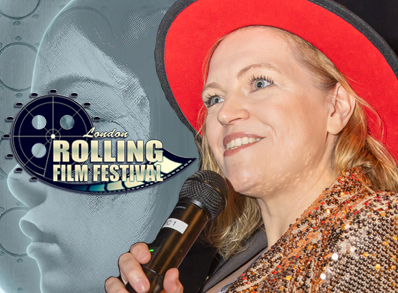
At the London Rolling Film Festival 2026, actor, filmmaker and advocate Helen Oakleigh challenged the industry to think beyond simply putting disabled people on screen — arguing for multidimensional characters, accessible productions and inclusion that begins long before the cameras start rolling.
Representation matters.
But representation is about considerably more than simply being visible.
Closing the industry programme at the London Rolling Film Festival 2026, Helen Oakleigh led an extensive and highly interactive session exploring disability, working-class and queer representation across film and television.
It was a discussion about who audiences see on screen, but also about who gets through the door, who gets to work behind the camera and whether the structures surrounding filmmaking allow people to do their jobs.
For Oakleigh, the starting point was intersectionality.
“There is no such thing as one label per person,” she told the room, explaining that identities and experiences including race, ethnicity, gender identity, class, language, religion, disability, sexuality, mental health, age and education can intersect in different ways.
That makes assumptions particularly dangerous.
No two people necessarily require the same thing simply because they share a disability, identity or characteristic.
And throughout Oakleigh’s discussion, one principle kept returning:
Ask. Don’t assume.
ONE IN FOUR — BUT NOT ON SCREEN
Oakleigh presented UK figures showing approximately 16.8 million people were disabled in 2023–24, representing around 25% of the population — one person in four.
She also highlighted a substantial employment disparity, citing an employment rate of 53% among disabled people compared with 82% among non-disabled people.
Yet that prevalence isn’t reflected on screen.
Oakleigh presented figures showing disabled characters accounting for approximately 2.4% of screen characters.
Even when disabled characters do appear, however, simply increasing the number isn’t enough.
The characters themselves need to be people.
“Disabled people are more than their disabilities,” Oakleigh stressed.
Work. Friends. Sex. Love. Hobbies. Life.
Disability may be an important part of somebody’s identity and may naturally form part of their story, but that doesn’t mean every conversation they have or every storyline they experience needs to revolve around it.
Oakleigh distilled the point into one of the session’s most memorable observations:
“As a wheelchair user, my chair is my shoes. How many characters on screen only talk about their shoes?”
DISABLED STORIES ARE STORIES FOR EVERYONE
Among the productions highlighted during the session were Crip Camp: A Disability Revolution, CODA, When Barbara Met Alan and television drama Code of Silence.
Oakleigh also addressed a problem that can occur even when strong work is being made: the assumption that a film featuring disabled people is primarily intended for disabled audiences.
The distinction she drew was important.
There is nothing wrong with telling stories specifically about disability.
What matters is whether the person at the centre of that story is allowed to be multidimensional.
“If a big part of your identity is whatever it may be, of course, organically it’s going to be spoken about,” she explained.
The question is whether disability is part of the character or the entirety of the character.
WHEN REPRESENTATION BECOMES “INSPIRATION”
That also led the discussion towards what Oakleigh described as “inspiration porn” — portraying disabled people principally as inspirational objects for non-disabled audiences rather than as people with lives of their own.
She recalled reactions after she began using a wheelchair, including assumptions that using the chair would somehow make her particularly muscular or sporty.
The irony was that Oakleigh had already been sporty, including playing hockey at the Gay Games in Paris.
The comments weren’t necessarily intended maliciously.
But they demonstrated how limited representation can create assumptions that filter into everyday life.
And that, Oakleigh argued, is why fully realised characters matter.
Stereotypes don’t necessarily remain on the screen.
ACCESS ISN’T JUST ABOUT WHEELCHAIRS
Authentic representation in front of the camera formed only one part of Oakleigh’s argument.
What happens behind it matters too.
Oakleigh spent a substantial part of the session discussing the role of an access coordinator — a relatively recent production role dedicated to helping identify and address the access requirements of cast, crew, contributors and others working on a production.
Crucially, those requirements aren’t restricted to somebody with an immediately visible disability.
A crew member may need somewhere to sit.
Someone might struggle to read the conventional format of a call sheet.
Another person may need a quiet space.
Someone may have difficulties regulating their temperature.
There could be an allergy, a temporary illness or injury, a hidden disability or simply a practical adjustment that allows somebody to work more effectively.
Oakleigh gave her own example of working during a heatwave and being provided with ice packs on set because of difficulties with temperature regulation.
Simple accommodation.
Problem solved.
Job done.
The role of the access coordinator, therefore, isn’t to make assumptions about who is disabled.
It is to create an opportunity for everybody to say what would enable them to do their job.
“It’s just as easy as asking, but discreetly, not in front of everybody.”
Even the method of asking can matter.
Would somebody rather discuss their requirements by telephone? Email? Zoom? In person?
Accessibility begins with communication.
ANTICIPATE. ASK. ASSESS. ADJUST. ADVOCATE.
Oakleigh used the session to explore five principles of access:
Anticipate. Ask. Assess. Adjust. Advocate.
The first begins before anybody reaches the set.
If a production knows it wants genuinely inclusive casting and crewing, accessibility cannot first become a consideration after somebody has already been hired.
Is the audition space accessible?
Is there somewhere quiet?
Are the necessary facilities available?
What potential barriers can be identified during pre-production rather than during the shoot?
Then comes perhaps the simplest principle of all:
Ask.
“Never make assumptions,” Oakleigh said.
Someone with an obvious physical disability may also have access requirements that aren’t visible. Someone without any visible disability may require an adjustment nobody would know about unless they were given the opportunity to explain it.
Assess We value self reflection.
Adjust recognises that circumstances aren’t static. Weather changes. Locations change. People become ill. Requirements can change during production.
And advocate means being prepared to call out a problem or support somebody who may not feel able to challenge it themselves.
For Oakleigh, these shouldn’t ultimately feel like extraordinary measures.
They should become ordinary filmmaking practice.
“Once these changes are embedded within a set, we won’t need these conversations anymore because it will be learned organically.”
A HAPPY SET IS A MORE FUNCTIONAL SET
Oakleigh also made a straightforward production argument for dedicated access coordination.
Film sets change.
Weather changes.
Schedules move.
People become ill.
Departments are already concentrating on their own responsibilities.
Giving somebody specific responsibility for access means those needs don’t become another task pushed onto somebody who is simultaneously trying to perform another job.
“A happy set is always going to be more functional,” Oakleigh said.
For her, a dedicated access coordinator is therefore “worth every penny.”
ACCESSIBILITY SHOULD NEVER BECOME A TICK BOX
But there is another danger.
Accessibility can become performative.
Oakleigh recalled hearing about an event where an access coordinator was asked to arrange sign-language interpretation.
The coordinator naturally asked who required it so they could ensure that person was positioned somewhere they could see the interpreter.
The answer?
Nobody.
The organisers simply wanted to appear as though they were providing accessibility.
For Oakleigh, that fundamentally misunderstands inclusion.
Resources should meet actual needs rather than function as visible evidence that an organisation has ticked an accessibility box.
At the same time, potential attendees need to know accommodations can be made, otherwise the absence of visible provision may prevent somebody from attending in the first place.
Again, the solution comes back to communication.
Ask people what they need.
Tell people what can be provided.
Then provide it.
THE TWO DIS TEST
Oakleigh then introduced one of the most distinctive ideas of the session.
The Two Dis Test.
Inspired by the well-known Bechdel Test, which examines whether women in a story are permitted conversations with one another about something other than a man, Oakleigh has developed a similarly straightforward challenge around disability representation.
The principle:
Two disabled characters speak to each other about something other than access, health or disability.
Oakleigh isn’t proposing a rigid rule that every individual film must pass.
Instead, she wants filmmakers and production companies to examine patterns across their work.
A film doesn’t contain that interaction?
Fine.
The next one doesn’t?
Fine.
But what happens when a company has produced 30 or 50 films and two disabled people have still never been allowed to share an ordinary conversation?
“Maybe just have a think about that,” Oakleigh suggested.
With one in four people living with disability according to the figures presented during the session, two disabled people occupying the same fictional world shouldn’t be remarkable.
They could be discussing work.
Football.
Dinner.
Their terrible date last night.
Or their shoes.
Anything, in fact, other than being required to explain their existence to the audience.
AUTHENTICITY, NOT TOKENISM
Oakleigh repeatedly stressed that increasing representation cannot simply mean inserting a single disabled character into a production and considering the work finished.
Nor should one disabled character be expected to represent an entire community.
“There is no ‘a bisexual person looks like this’, or ‘somebody with autism looks like this’,” she said.
People are individuals.
That becomes particularly important when audiences have rarely encountered a particular identity on screen, because an isolated portrayal can inadvertently become representative of something far broader than one character.
Oakleigh wants more representation partly because more characters create room for difference.
One character doesn’t have to carry the responsibility of representing everybody.
Ten characters can be ten different people.
MARLEE MATLIN AND CHANGING THE INDUSTRY
Oakleigh also highlighted Marlee Matlin as a case study in representation extending beyond individual performances.
During the session, she discussed Matlin’s decades of advocacy around authentic casting, captioning, interpreters and greater accessibility across the entertainment industry, alongside her role in pushing for opportunities for Deaf performers.
The lesson again extended beyond one individual.
Change doesn’t happen only through the stories appearing on screen.
It happens through casting.
Production.
Employment.
Training.
Access.
And people being prepared to advocate for change when established systems don’t provide it.
THERE IS NO SUCH THING AS PERFECT
Perhaps the most important thing Oakleigh said came right at the beginning.
After London Rolling Film Festival founder Alida Pantone introduced the session by talking about breaking physical and mental barriers and trying to make the festival better for everybody, Oakleigh immediately rejected one word:
Perfect.
“There’s no such thing as perfect.”
Nobody can understand every other person’s experience.
Nobody is going to know everything.
And fear of occasionally getting something wrong shouldn’t become an excuse for doing nothing.
Instead, Oakleigh asked filmmakers to listen, ask questions and remain open to learning.
That philosophy ran through everything that followed.
Authentic representation isn’t achieved by putting a wheelchair into a scene.
Accessibility isn’t achieved by adding another line to a production checklist.
And inclusion isn’t achieved by assuming you already know what somebody needs.
It starts much earlier than that.
It starts by asking.
And then listening to the answer.
No Comment