
Robbie Moffat On AI, Independent Film And Putting Imagination Back Before Budget
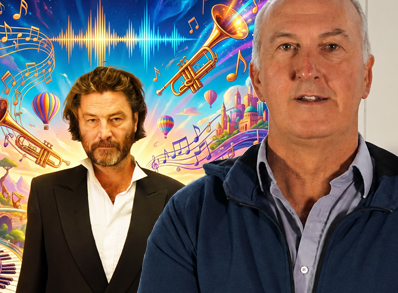
Artificial intelligence may be one of the most divisive subjects in filmmaking, but for Palm Tree Films’ Robbie Moffat, the fundamental question is considerably simpler: what can a filmmaker do with it?
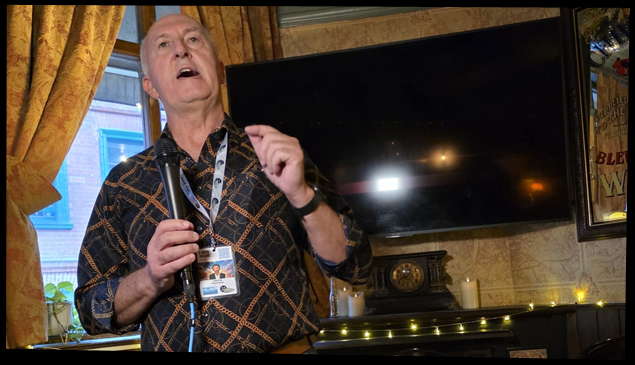
Artificial intelligence was never going to produce a quiet discussion at the London Rolling Film Festival.
Gathered at The Queens Head Piccadilly on Thursday evening, filmmakers and industry guests came armed with questions about actors, musicians, jobs, consent, authenticity and what increasing use of generative technology could mean for an industry already undergoing enormous change.
At the centre of that conversation was Robbie Moffat of Palm Tree Films.
Moffat wasn’t there to argue that concerns surrounding AI don’t exist.
He was there to argue that AI exists regardless — and independent filmmakers need to understand what that means for them.
FROM 1979 TO 41 FEATURE FILMS
Moffat’s perspective is particularly interesting because his filmmaking career predates the current technological debate by several decades.
He recalled attempting to enter filmmaking as far back as 1979, travelling to Hollywood at 25 only to discover that the successful screenwriter he intended to meet had disappeared without paying his rent.
It would take until 1999 for Moffat to make his first feature.
Short filmmaking provided his practical education along the way: learning cameras, editing and the technical realities that sit between an idea and a completed film.
But making one film created another problem.
How do you make the second?
Moffat gradually developed an independent production model based upon stripping production back when necessary, controlling overheads and reinvesting money into subsequent projects.
The result, he told the LRFF audience, is 41 feature films, all of which remain owned by his company.
Today, Palm Tree Films operates with a core team of approximately four people working throughout the year. Development can largely happen internally, while increasingly accessible hardware and software have dramatically reduced the cost of post-production.
For Moffat, AI represents the next stage of that evolution.
WHEN THE LOCATION DOESN’T HAVE TO EXIST
Independent filmmaking has always involved compromise.
Write a scene requiring a location you cannot afford and eventually the realities of money, travel, insurance, permissions and logistics collide with what’s on the page.
Moffat described the familiar independent-filmmaking shorthand: a scene takes place in a wood, a street, a pub or a house.
Keep it achievable.
Generative AI potentially changes that calculation.
“If you’ve got crew, they go, ‘It says here you’re shooting in Lambeth Palace, and here we are in this little house,’” Moffat joked during the discussion.
With AI, he argued, the filmmaker can instead ask where the scene should happen.
Rome?
Put the Colosseum behind the actors.
Need London during the 1960s? Generate the environment rather than licensing a few seconds of archive footage.
Need traffic removed, a crowd introduced, an impossible landscape or a character placed somewhere production could never physically reach?
Those decisions increasingly become creative rather than purely financial ones.
That’s where Moffat sees the real potential.
Not artificial intelligence for its own sake.
Imagination without quite so many financial handcuffs.
DREAMING BIGGER
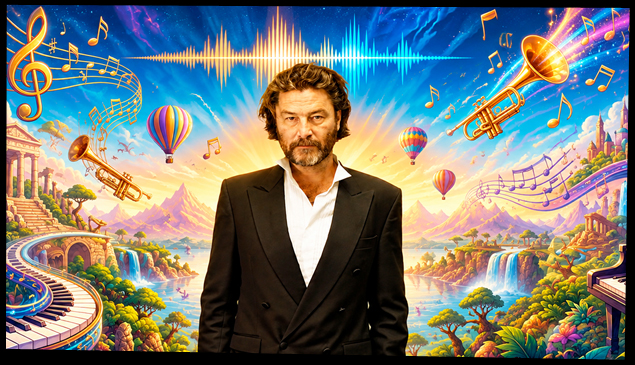
That philosophy is particularly evident in Dreamer, Moffat’s feature screening out of competition at LRFF on Saturday.
The film grew partly from the limitations of the technology itself.
Around a year ago, Moffat recalled, AI continuity could be unreliable. Clothing could change within sequences and visual details could drift.
So he incorporated that instability into the concept.
A dream doesn’t necessarily maintain continuity.
Characters and environments change. Details disappear. Places transform.
The limitations of the technology became part of the language of the film.
That situation has already changed considerably, Moffat says. On Coconuts, the project Palm Tree Films is currently completing, faces and costumes can now remain substantially more consistent, although voices may still require dubbing.
Coconuts carries another significance.
Moffat originally wrote the story as a novel in 1986.
For decades, he considered its scope impractical to film.
AI changed the equation.
The story can contain an air crash, a condor, a yeti or whatever else its world requires without each creative decision bringing a potentially impossible physical-production bill behind it.
“What we’re saying is, it opens up the imagination in ways that you couldn’t have done it before,” Moffat told the room.
AI DOESN’T HAVE TO MEAN NO ACTORS
This was also where the evening became more complicated.
Concerns were raised about performers, crew, musicians and other people whose livelihoods could potentially be affected by production increasingly moving into generative environments.
Moffat’s answer was characteristically direct, but his own filmmaking model is notably more hybrid than the phrase “AI filmmaking” might initially suggest.
“We still do live shooting,” he stressed.
One recent film involved 72 production days: 53 AI and 19 live-action, leaving approximately four weeks of conventional physical filming.
“We’re still using live actors. We still have the interaction.”
His proposition isn’t therefore necessarily to remove physical filmmaking, but to use AI for material surrounding it that an independent production previously couldn’t afford.
“You can now make your film into something which wouldn’t have been possible before,” he said.
CONSENT, LIKENESS AND GETTING PAID
That doesn’t eliminate questions about what happens once a performer’s face enters an AI production pipeline.
Moffat described Palm Tree Films’ current approach as involving two contracts.
The first covers the actor’s conventional physical performance, paid by the day or week.
The second covers AI use of their image.
Under that agreement, performers are compensated according to the number of frames containing their likeness.
Moffat said the actors his company has worked with under the system have so far been happy with the arrangement, although it has introduced the decidedly unglamorous job of physically accounting for those frames.
The broader questions surrounding AI likeness rights, consent and compensation are unlikely to be settled by any single filmmaker’s contractual model.
But Moffat was equally uncompromising when the conversation moved to unpaid human labour.
When another filmmaker suggested they were creating employment despite actors working without payment, Moffat challenged the premise.
“Don’t ever have anybody work for free,” he said.
For him, asking performers to work without payment isn’t employment.
It is exploitation.
His alternative proposition is to find production models that reduce costs elsewhere, build the necessary financial reserves and then employ performers properly.
It’s an important distinction in understanding where Moffat is actually coming from.
The objective isn’t simply “remove people because people cost money.”
It’s finding another way of getting the film made.
WHEN STUDIO-SCALE TOOLS START REACHING INDEPENDENT FILMMAKERS
There is another element to the AI discussion that goes beyond whether the technology works.
Who can afford to use it?
Cinema has been transformed repeatedly by technologies that initially required enormous budgets, specialist infrastructure and teams of highly skilled technicians.
Computer-generated imagery and performance capture opened extraordinary creative possibilities, but the most sophisticated applications were initially the preserve of productions capable of paying for them.
Over time, those technologies matured. Software improved. Hardware became cheaper. Knowledge spread. Capabilities that once belonged almost exclusively to major productions gradually became available further down the filmmaking ladder.
Generative AI potentially accelerates that process.
Moffat said Palm Tree Films currently makes extensive use of Google Flow, citing a current cost of £189 per month with the ability to download material in 4K.
That does not suddenly give an independent filmmaker the resources or expertise of a major Hollywood studio or a world-leading visual-effects company.
Nor does it diminish the artistry of the thousands of specialists who have pushed visual effects and performance capture forward.
What it can do is give a filmmaker without studio-scale money access to some creative possibilities that previously required studio-scale money.
And that changes the conversation.
The independent filmmaker may not be able to physically close a major city street, transport a production around the world, populate a location with hundreds of extras or recreate another historical period.
But increasingly they may be able to create an image that allows the story to go there anyway.
For independent cinema, that democratisation could prove every bit as significant as the underlying technology.
THE £189 PRODUCTION TOOL
Compared with travelling a production unit to another country, licensing expensive archival imagery or constructing elaborate physical environments, the attraction of Moffat’s £189-a-month example isn’t difficult to understand.
But he also believes today’s economics won’t necessarily last.
Technology companies are currently investing enormous sums in developing generative systems and encouraging adoption. His advice to filmmakers is consequently to experiment while the barrier to entry remains comparatively low.
The technology may become considerably more expensive as it matures.
And underneath that argument is something filmmaking has encountered many times before.
The tools change.
FILMMAKING HAS BEEN HERE BEFORE
New filmmaking technologies rarely arrive without resistance.
Digital cinematography, CGI, 3D and motion capture have all, at different points in their development, prompted arguments about authenticity, artistry and what might be lost when technology assumes a greater role in creating what audiences see on screen.
Motion capture provides an especially interesting comparison.
Rather than eliminating performance, its development ultimately demonstrated another way in which a human performance could be translated onto the screen. Performers could inhabit characters that conventional makeup, prosthetics or physical production could never realise in quite the same way.
That history doesn’t mean AI will inevitably develop in precisely the same fashion.
There are questions surrounding generative AI — particularly copyright, training material, employment and the replication of someone’s likeness or work — that are specific to this technology and require their own answers.
But history does demonstrate something else.
A new tool does not, by itself, determine whether creativity survives.
Artists determine what they do with it.
WHAT HAPPENS TO THE HUMAN ELEMENT?
Some of the most interesting exchanges of the evening came when the discussion moved beyond economics.
Can generated imagery replace the interaction between actors?
What happens to musicians?
What control should a performer retain over how their image is subsequently used?
Where does prompting end and authorship begin?
There weren’t universal answers in the room.
Nor should there have been.
During Thursday’s earlier press conference, LRFF juror and filmmaker Helen Oakleigh had offered an important counterpoint while discussing the festival’s forthcoming Representation Matters panel.
Oakleigh acknowledged that AI offers potentially remarkable possibilities but warned that filmmakers also have a responsibility to protect individual and authentic voices.
“Not one single person in this room has got the same journey,” she said.
For Oakleigh, those differences are precisely where storytelling comes from.
Moffat’s evening discussion approached the same technological moment from another direction: don’t allow fear of the technology to prevent filmmakers from discovering what they can create with it.
Those positions don’t have to be mutually exclusive.
In fact, putting them within the same festival may be considerably more interesting than pretending there is only one acceptable conversation about AI.
ANOTHER TOOL IN THE FILMMAKER’S BOX
Cinema has never stood still.
Technological change repeatedly alters which stories can be made, how they’re made and who has the resources necessary to make them.
AI brings legitimate questions around consent, copyright, employment, compensation and creative control, and Thursday evening’s discussion demonstrated that filmmakers aren’t going to agree immediately on every answer.
They shouldn’t have to.
But one thing became increasingly apparent during Moffat’s discussion: he doesn’t regard the technology itself as the filmmaker.
He regards it as something a filmmaker can use.
His own production model remains hybrid: live actors, physical filming, conventional performance and AI-generated material operating alongside one another.
And Dreamer, screening at the London Rolling Film Festival on Saturday, provides audiences with an opportunity to judge the results rather than merely debate the technology behind them.
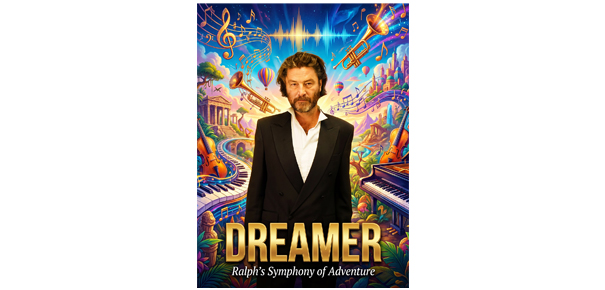
Dreamer screens on Saturday 19th September at Vue Cinema, Piccadilly at London Rolling Film Festival.
THE FAN CARPET’S TAKE
Filmmaking has been here before.
New technologies have repeatedly arrived accompanied by fears about what they might remove from the creative process. CGI, digital filmmaking, 3D and motion capture each changed established ways of working, before filmmakers and performers began demonstrating what those technologies could add.
AI is not identical to those earlier developments and shouldn’t be treated as though its legitimate ethical questions don’t exist.
But after listening to Robbie Moffat’s discussion at the London Rolling Film Festival, our takeaway was not that AI represents the end of human filmmaking.
It was that filmmakers have been handed an extraordinarily powerful new tool.
Perhaps its greatest potential for independent cinema isn’t replacing the people who make films at all.
It is giving filmmakers who don’t have studio budgets the opportunity to attempt stories and images that, until very recently, might never have made it beyond the page.
The technology isn’t the filmmaker.
The filmmaker still has to decide what to do with it.
And perhaps that’s ultimately the most interesting question of all.
What will filmmakers make now that some of the financial barriers between their imagination and the screen are beginning to move?
No Comment