
A Girl Called Alice x LRFF: How Tegan Grace Muggeridge Turned A London Problem Into An Award-Recognised Film
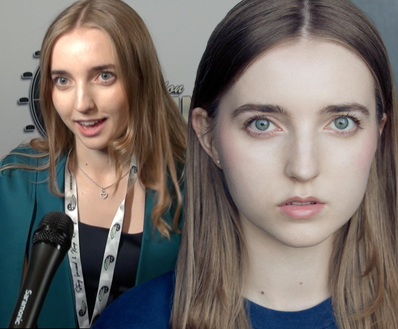
A Girl Called Alice has travelled from Raindance to the London Rolling Film Festival while collecting recognition along the way — but for co-writer and star Tegan Grace Muggeridge, the success means something more than adding laurels to a poster.
For Tegan Grace Muggeridge, A Girl Called Alice began with something much more immediate than the film festival circuit.
It was a story she wanted to tell.
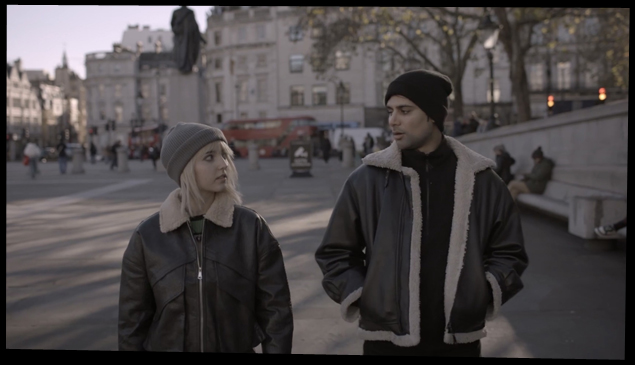
Co-written by Muggeridge and director Tristan Loraine, the short follows Alice, played by Muggeridge, and tackles the very real problem of mobile phone theft on the streets of London.
Speaking to The Fan Carpet at the London Rolling Film Festival, Muggeridge said that more than 150,000 mobile phones were stolen during 2024 and explained that the production worked with the Metropolitan Police and EE, while Canon supported the filmmakers with equipment.
The resulting film has subsequently developed a life well beyond the original production.

FROM RAINDANCE TO LONDON ROLLING
A Girl Called Alice arrived at the London Rolling Film Festival following an earlier appearance at Raindance and a growing collection of awards and recognition.
Yet when The Fan Carpet asked Muggeridge what that recognition meant to her, her answer returned immediately to the reason the film existed in the first place. “It feels really powerful to have the story that I have cared about… showcased, because it's such an important issue.”
For Muggeridge, the purpose was awareness: taking an everyday crime that can have consequences far beyond the financial value of a stolen device and putting a human story behind it.
That distinction matters.
Awards can help a short film travel. Festival selections put it in front of new audiences. Industry recognition can open doors for the people who made it.
But in the case of A Girl Called Alice, each new audience also extends the reach of the subject the filmmakers originally wanted people to discuss.
STORYTELLING WITH PURPOSE
That approach increasingly looks like a thread running through Muggeridge's work.
During our conversation at London Rolling, she had only just completed the first filming block on another project — this time inspired by Susan, a woman Muggeridge knew who had been diagnosed with lobular breast cancer and who died last year.
The production has also involved Star Trek actress Marina Sirtis, who knew Susan herself.
Again, Muggeridge's description of the project wasn't centred upon her own performance or where the film might take her professionally. She talked about the women she has met and the importance of giving their experiences a voice.
Elsewhere, she's been experimenting with very different forms of filmmaking.
In the two-minute period short The Queen's Keys, Muggeridge plays an assistant to a queen in a production using projected backgrounds created with Soho AI, incorporating human-made art objects and three-dimensional scans.
And she's continuing to write.
Muggeridge told The Fan Carpet that another breast-cancer-focused series is currently being developed, while being careful not to announce details that aren't yet confirmed.
ONE DAY NEXT WEEK
Another forthcoming project, One Day Next Week, incorporates footage from a silent vigil outside Downing Street.
Muggeridge described women standing silently for 22 minutes, representing the 22 women she said are diagnosed with breast cancer each day in the UK.
The footage will form part of the film, currently planned for release in summer 2027.
It is another project in which the film itself becomes a means of amplifying something outside the film industry.
And perhaps that helps explain why the journey of A Girl Called Alice has resonated so strongly with its co-writer and star.
Its growing recognition is undoubtedly an achievement.
But the awards aren't the end of the story.
Every screening means somebody else sees Alice.
Every festival means another audience encounters the issue behind her story.
And for a film created because its makers wanted people to pay attention, that may be the most meaningful recognition of all.
No Comment