
Itsy Bitsy Bikini – Ashleigh Harley Was Joined By Brian Hyland As She Led #SAVEYOURLIVES Supporters At Downing Street
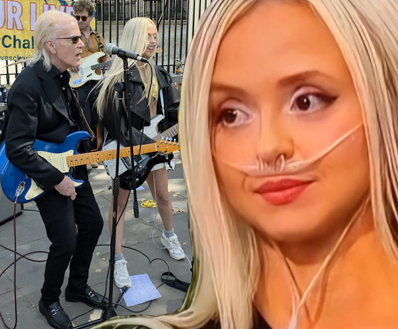
Singer, filmmaker and campaigner Ashleigh Harley brought #SaveOurLives to the heart of Westminster, joined by Itsy Bitsy Teenie Weenie Yellow Polka Dot Bikini singer Brian Hyland as supporters called for change for young people facing delayed diagnosis of complex conditions.
For most people, Itsy Bitsy Teenie Weenie Yellow Polka Dot Bikini is an instantly recognisable piece of pop history.
For Ashleigh Harley, it has become something considerably bigger.
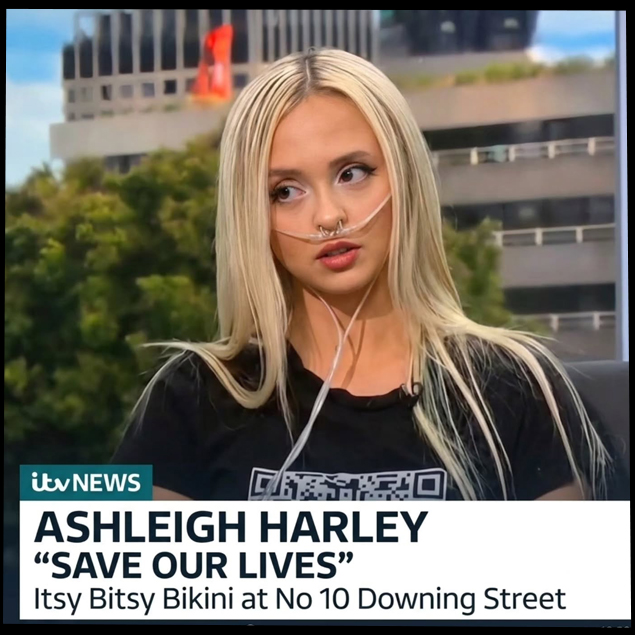
Harley led supporters outside Downing Street as part of her continuing #SaveOurLives campaign, calling for greater awareness of the experiences of young people struggling to receive diagnoses and appropriate treatment for complex health conditions.
Standing alongside her was Brian Hyland, the American singer who took Itsy Bitsy Teenie Weenie Yellow Polka Dot Bikini to the top of the US charts in 1960.
More than six decades later, Hyland picked up a guitar and performed the song again — this time alongside Harley, outside Downing Street and in support of a campaign born from her own experience.
FROM POP CLASSIC TO CAMPAIGN ANTHEM
Harley has recorded her own version of Itsy Bitsy Teenie Weenie Yellow Polka Dot Bikini to raise funds and awareness for #SaveOurLives.
Bringing Hyland together with Harley at Downing Street connected the song's past with a very different purpose in the present.
Speaking about the campaign, Hyland said the experiences of children losing significant parts of their childhood to illness and delayed diagnosis had affected him deeply. “It touches me immensely because it’s such a tragic situation with children having their childhood taken away.”
But behind the music and the colourful imagery surrounding #SaveOurLives is the experience that led Harley to campaign in the first place.
“WE REALISED SOMETHING WAS WRONG”
Harley was 12 when she experienced her first seizure and began becoming seriously ill.
She has described experiencing daily seizures, problems with her sight and episodes of paralysis that made school increasingly impossible. “I couldn’t see. I was getting paralysis quite badly, so I couldn’t use my hands. I couldn’t write down stuff. That was the first episode, that was when we realised something was wrong.”
What followed was more than a decade searching for an explanation.
Harley and her family pursued numerous possibilities without doctors being able to establish what was happening.
She recalled encountering an attitude that because she was young, serious illness was not expected. “There was the stipulation of, young people don’t get ill, therefore, you know, just go away and get on with it. It’ll be all right.”
It wasn't all right.
Her health continued to deteriorate. Harley lost the ability to eat and speak and at one stage relied upon a computer to communicate.
Eventually, she was sent home from hospital to die.
She survived.
A MOTHER WHO WOULDN'T STOP LOOKING
It was Harley's mother who continued researching her daughter's symptoms and eventually identified the specialists they needed to approach. “It actually was my mum who had to do all the research to figure out exactly what it was, figure out the sort of specialists we needed to talk to, and then as soon as she figured that out, then I was able to get treatment.”
Harley was subsequently diagnosed with Ehlers-Danlos syndrome (EDS), a genetic condition affecting connective tissue.
For Harley, finally having an explanation could not return the years that had already been lost.
She has described the wait for a diagnosis as having “ruined” her youth — and subsequently discovered that she was far from alone in experiencing prolonged difficulties obtaining answers.
Instead of allowing that experience to remain simply part of her own history, Harley decided to do something with it.
#SAVEYOURLIVES
Through The Dark Horse Foundation and the continuing #SaveOurLives campaign, Harley is now trying to change the experience for those who come after her.
The campaign seeks to raise awareness of delayed diagnosis and improve the routes available to young people living with complex and difficult-to-diagnose conditions.
Its ambitions extend beyond awareness.
The campaign hopes to establish a new service working alongside existing NHS provision, designed to accelerate the diagnostic process and improve outcomes for people facing prolonged waits for answers.
#SaveOurLives has also developed a distinctive identity around ITSY, a character created by Marc Jason Ali to help carry its message and make the campaign approachable and recognisable.
Alongside ITSY, the campaign has developed a growing merchandise range including T-shirts, hoodies, caps and tote bags, giving supporters another way to visibly stand behind #SaveOurLives while helping raise funds for its continuing work, with £10 of every sale going to the #SaveOurLives campaign.
The combination of campaigning, music, ITSY and merchandise allows #SaveOurLives to take an extremely serious subject and communicate it in a way designed to be visible, approachable and difficult to ignore.
That mission brought campaigners to Downing Street.
And it brought Brian Hyland with them.
BRIAN HYLAND JOINS THE FIGHT
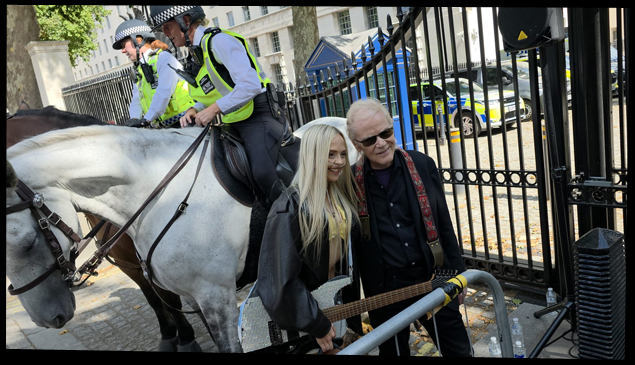
With guitars in their hands and a microphone set up outside Downing Street, Harley and Hyland performed Itsy Bitsy Teenie Weenie Yellow Polka Dot Bikini together as supporters gathered around them.
It was an unlikely new chapter for a song first released when Hyland was a teenager.
But more than six decades after it became a hit, its association with Harley and #SaveOurLives has given the song another purpose: attracting attention to young people whose illnesses can otherwise leave them feeling unseen.
The Downing Street event brought together music, personal testimony and campaigning, with supporters adding their voices to Harley's call for change.
For Harley, however, #SaveOurLives isn't an abstract campaign.
She knows what delayed diagnosis can cost because she lived it.
She knows what it means for a family to keep searching because hers did.
And she knows what it is to be told that there is nothing more that can be done.
Ashleigh Harley was sent home to die.
She is still here.
Still making music. Still making films. Still campaigning.
And outside Downing Street, with Brian Hyland standing beside her and #SaveOurLives supporters behind her, she was making sure people listened.
SUPPORT #SAVEYOURLIVES
Supporters can help spread the #SaveOurLives message through the campaign's merchandise range, with proceeds helping support its continuing work.
No Comment