
London Rolling Film Festival Closes 2026 Industry Programme With Helen Oakleigh’s Call For Representation To Lead To Action
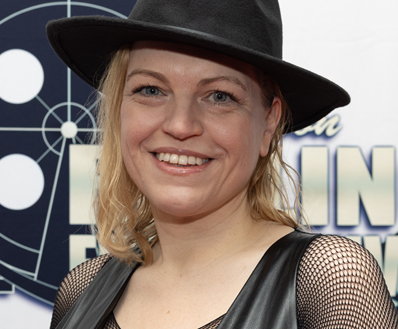
The London Rolling Film Festival closed its 2026 industry programme with an expansive session led by Helen Oakleigh exploring disability, class and queer representation — before Festival Director Alida Pantone revealed that she has asked Oakleigh to help LRFF identify and address accessibility barriers for future editions.
The London Rolling Film Festival 2026 concluded its industry programme not simply by talking about representation, but by considering what practical change should follow.
Actor, filmmaker and advocate Helen Oakleigh led the festival's closing industry session, bringing together disability, working-class and queer representation in a discussion that moved from what audiences see on screen to the structures determining who gets to participate in the film industry at all.
Throughout the session, Oakleigh returned to a deceptively simple principle:
Nobody knows everything about everybody else's experience.
What matters is being prepared to ask, listen and learn.
And as LRFF looked ahead to its own future, the festival applied that principle to itself.

“THERE'S NO SUCH THING AS PERFECT”
Introducing the session, LRFF Festival Director Alida Pantone acknowledged accessibility problems encountered during the 2026 festival and spoke about the festival's desire to break down barriers.
Oakleigh immediately challenged one part of Pantone's introduction — the idea of becoming “perfect”. “There's no such thing as perfect.”
Instead, Oakleigh encouraged an environment in which people aren't paralysed by the possibility of getting something wrong.
“Never be afraid of getting things right or wrong,” she said, provided people remain open to listening and recognising that everyone brings different life experiences into the room.
It became an idea that would run throughout the session.
Inclusion isn't achieved by claiming to have solved everything.
It requires continually being willing to learn.
REPRESENTATION IS INTERSECTIONAL
Oakleigh began with intersectionality, describing people as inherently multilayered rather than collections of isolated labels.
Race, ethnicity, gender identity, class, language, religion, disability, sexuality, mental health, age, education and other aspects of somebody's life can intersect to produce completely different experiences.
That has consequences both for storytelling and for the environments in which those stories are made.
A filmmaker cannot assume that two people who apparently share one characteristic will have identical experiences or requirements.
And a production cannot necessarily identify somebody's needs simply by looking at them.
Oakleigh therefore encouraged those attending to talk to one another throughout the session, repeatedly turning the room itself into part of the discussion rather than delivering a conventional lecture.

DISABILITY: MORE THAN A CHARACTERISTIC
The first major section examined disability and access.
Oakleigh presented figures showing approximately 16.8 million disabled people in the UK in 2023–24, around one quarter of the population, before contrasting that with figures she presented showing disabled characters accounting for approximately 2.4% of screen characters.
But her argument went considerably beyond increasing the number.
Disabled characters need to be allowed to exist as people.
They have work.
Friends.
Relationships.
Sex.
Hobbies.
Ambitions.
And conversations that have absolutely nothing to do with disability.
Oakleigh put the argument particularly memorably “As a wheelchair user, my chair is my shoes. How many characters on screen only talk about their shoes?”
The discussion explored authentic representation, access coordinators and the practical changes productions can make to allow people to work effectively.
It also introduced Oakleigh's Two Dis Test — inspired by the Bechdel Test — challenging the industry to depict two disabled characters talking to one another about something other than access, health or disability.
READ MORE: HELEN OAKLEIGH ON DISABILITY, ACCESS AND WHY REPRESENTATION MUST GO BEYOND THE WHEELCHAIR
CLASS: WHO GETS THROUGH THE DOOR?
The conversation then moved to class.
Oakleigh presented figures suggesting working-class characters have historically accounted for around 15–25% of depicted roles in British and American narrative cinema, despite estimates placing working-class people at a considerably larger proportion of society.
But again, what happens behind the camera became equally important.
If filmmaking requires expensive education, equipment, unpaid experience and the financial ability to survive gaps between productions, the question isn't simply whether working-class stories are represented.
It's whether working-class filmmakers get the opportunity to tell them.
AI COULD DEMOCRATISE FILMMAKING — BUT AT WHAT COST?
Artificial intelligence became one of the more nuanced parts of the discussion.
Oakleigh recognised that increasingly affordable technology could give filmmakers access to creative tools previously beyond their financial reach.
For creators without substantial resources, that potentially lowers barriers.
At the same time, she raised concerns around copyright, training material, environmental impact, stereotypes and the effect automation could have on entry-level employment.
One observation captured the contradiction “The easiest people to replace on set are the people you haven't employed yet.”
Those jobs are often where filmmakers begin learning.
If they disappear, people unable to afford film school or expensive professional training may lose one of their routes into the industry.
Oakleigh consequently emphasised the continuing importance of experienced filmmakers passing skills to those coming behind them.
The class discussion also explored accent discrimination, alternative ways of understanding class and whether more part-time roles could allow people with caring responsibilities, second jobs or unstable finances to remain within the industry.
READ MORE: HELEN OAKLEIGH ON CLASS, AI AND WHO ACTUALLY GETS THE CHANCE TO MAKE FILMS
QUEER REPRESENTATION: WHAT DO AUDIENCES LEARN FROM THE SCREEN?
Oakleigh's queer representation section drew partly on her own experience of growing up under Section 28, alongside films including Moonlight, Pride and Sweetheart.
The discussion then used the 2020 documentary Disclosure: Trans Lives on Screen, directed by Sam Feder and executive produced by Laverne Cox, as a case study.
Disclosure examines more than a century of trans representation in Hollywood and recurring portrayals built around violence, deception, ridicule and disgust.
Oakleigh argued that its lessons extend beyond trans representation.
When audiences have little personal experience of a particular community, film and television may provide much of what they think they know about it.
Representation therefore doesn't merely determine who gets seen.
It can contribute to how people are understood.
“IT'S OKAY TO MAKE MISTAKES”
Yet Oakleigh didn't want the responsibility of representation to make filmmakers afraid to try.
Instead, she highlighted what she described as “critiquing with love.”
Problematic portrayals can be examined honestly without assuming that nobody is capable of learning. “It's okay to make mistakes. It's okay to be learning. We are all learning.”
For Oakleigh, people cannot reasonably be expected to understand every other person's lived experience automatically.
They can, however, ask questions.
Listen.
Research.
Create opportunities.
And respond when somebody tells them something could be done better.
READ MORE: HELEN OAKLEIGH ON QUEER REPRESENTATION, DISCLOSURE AND WHY FILMMAKERS MUST BE ALLOWED TO LEARN
ACCESSIBILITY HAS TO HAPPEN BEFORE THE PROBLEM
That philosophy became particularly relevant to LRFF itself.
During the session, Oakleigh discussed the role of the access coordinator and shoutd out Jack Thorne's TV Access Project's (TAP) five principles for approaching accessibility:
Anticipate. Ask. Assess. Adjust. Advocate
Anticipating requirements during planning can prevent barriers emerging later.
Asking means speaking directly to people rather than deciding what they need on their behalf.
Assess means providing the necessary support.
Adjust recognises that circumstances and requirements can change.
And advocate means being willing to challenge barriers when they arise.
That discussion had particular relevance following accessibility difficulties encountered during this year's festival.
Rather than ignoring them, LRFF acknowledged them.
LRFF ASKS HELEN OAKLEIGH TO HELP IT IMPROVE
As the session drew to a close, Pantone thanked attendees for supporting the festival and specifically invited feedback about how future editions could improve.
She then revealed that she had asked Oakleigh to help LRFF identify accessibility issues before they become problems. “I kindly asked Helen if she would help the festival improve as an Access Advisor for us, to help me be aware of all the accessibility issues that we need to address and solve before they may happen.”
Pantone acknowledged that the 2026 edition had been hectic and that she needed somebody who could help the festival recognise potential barriers earlier.
Oakleigh's response also reflected the wider argument of her session.
Responsibility shouldn't belong to one person alone.
She hoped everyone would take ownership.
FROM CONVERSATION TO CHANGE
No film festival gets everything right.
Neither does any filmmaker.
That was perhaps the most important message to emerge from LRFF's closing industry session.
The objective isn't perfection.
It's progress.
Across more than two hours of discussion, Oakleigh examined three enormous subjects — disability, class and queer representation — but the same principles continually connected them.
Don't assume somebody else's experience.
Don't reduce people to labels.
Don't confuse visibility with genuine inclusion.
Create opportunities behind the camera as well as representation in front of it.
And when something doesn't work, acknowledge it and change it.
For the London Rolling Film Festival, that final principle now applies to the festival itself.
The conversation about accessibility didn't end when the panel finished.
For LRFF, it may instead have marked the beginning of the work ahead.
Stay Focused and Keep Rolling.
No Comment