


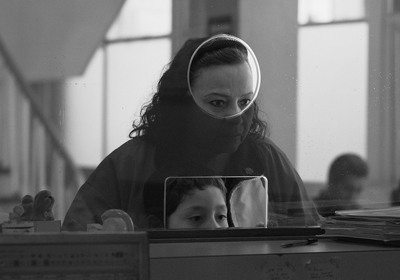
"deals with grief, loss, and the fear of emotional connection"
Shot in black and white, Moscas is directed by Fernando Eimbcke, a filmmaker with a distinctive sensitivity for intimate stories and understated humor. The film follows Olga, a woman who lives a strictly regulated, solitary life in a large apartment block in Mexico City. When financial necessity forces her to rent out a room, her carefully controlled world begins to shift after she unexpectedly finds herself sharing her space with a father and his nine-year-old son, Cristian.
At its core, Moscas deals with grief, loss, and the fear of emotional connection. These are heavy themes, but the film never becomes overwhelming. There are moments of lightness and quiet humor that make the story feel balanced and human, helping the audience breathe even when the subject matter is serious.
One of the most charming elements of the film is the presence of old video games, which become an integral part of the story. Seen through the child’s eyes, the game world opens up a space of imagination, escape, and emotional processing. It also brings a playful energy into the film.
The decision to shoot the film in black and white feels very intentional. Rather than drawing attention to itself, the absence of color keeps the focus on the story and the characters. It avoids visual distraction and allows the emotions, the silences, and the small gestures to come forward naturally. In a film dealing with loss and connection, working within shades of grey feels like the right choice. It allows the film to move within the territory of melodrama without becoming strident, echoing a classic sensibility reminiscent of Chaplin, where humor and sadness quietly coexist.
The title Moscas comes from Shakira’s song Moscas en la casa, which the director has cited as an early reference. The idea is simple and effective: flies are unwanted guests, the kind you try to chase away but eventually have to live with. Unlike butterflies or birds, flies are never romantic, never welcome. In the film, they become a quiet metaphor for intrusion, grief, and emotional presence, things you don’t invite into your life, but that settle in anyway. They also give the film light, funny moments, starting right from the opening.
The performances are one of the film’s strongest assets. Teresita Sánchez delivers a beautifully measured performance as Olga. Young Bastian Escobar is a natural on screen, bringing spontaneity and sincerity without ever feeling directed or artificial.
Moscas doesn’t offer easy answers, but it finds meaning in small gestures, shared spaces, and moments of unexpected connection.
No Comment